

Watch Videos
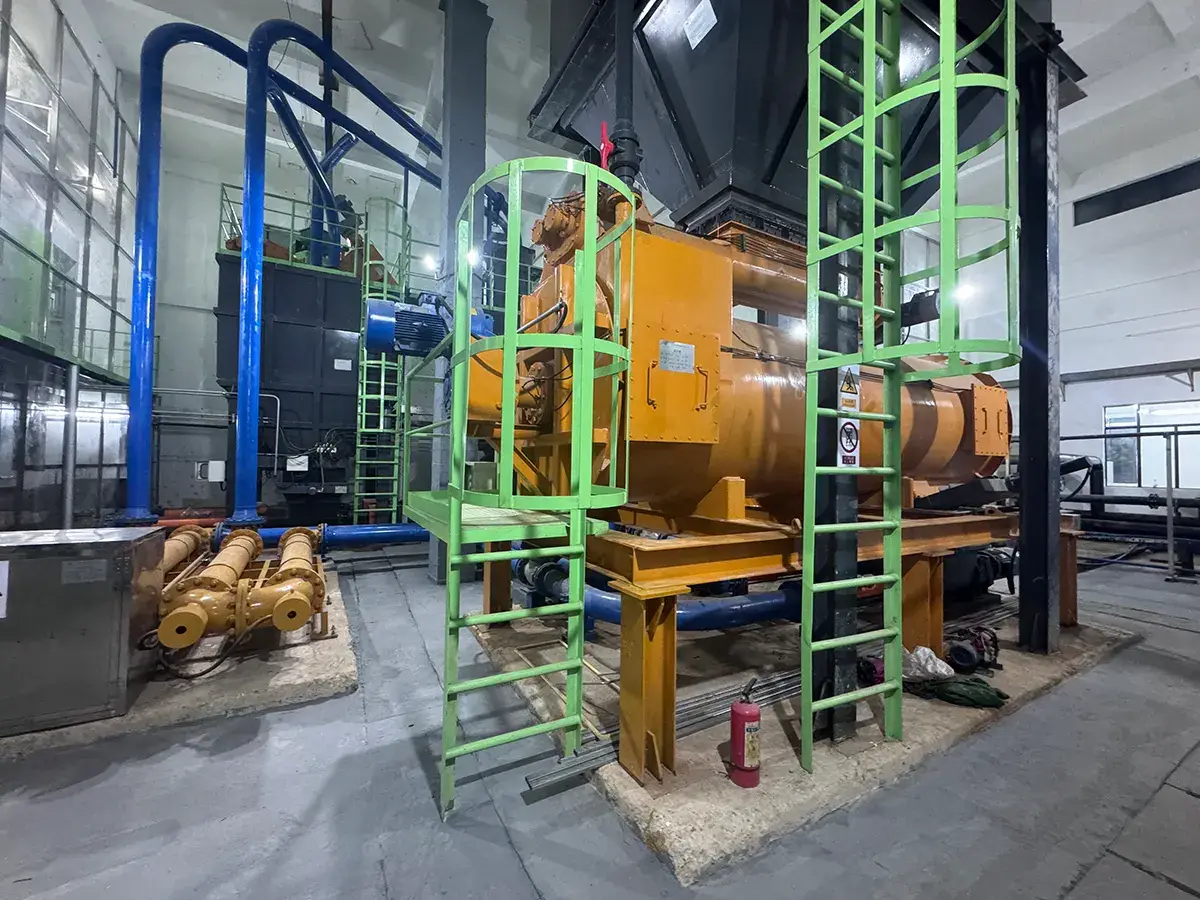
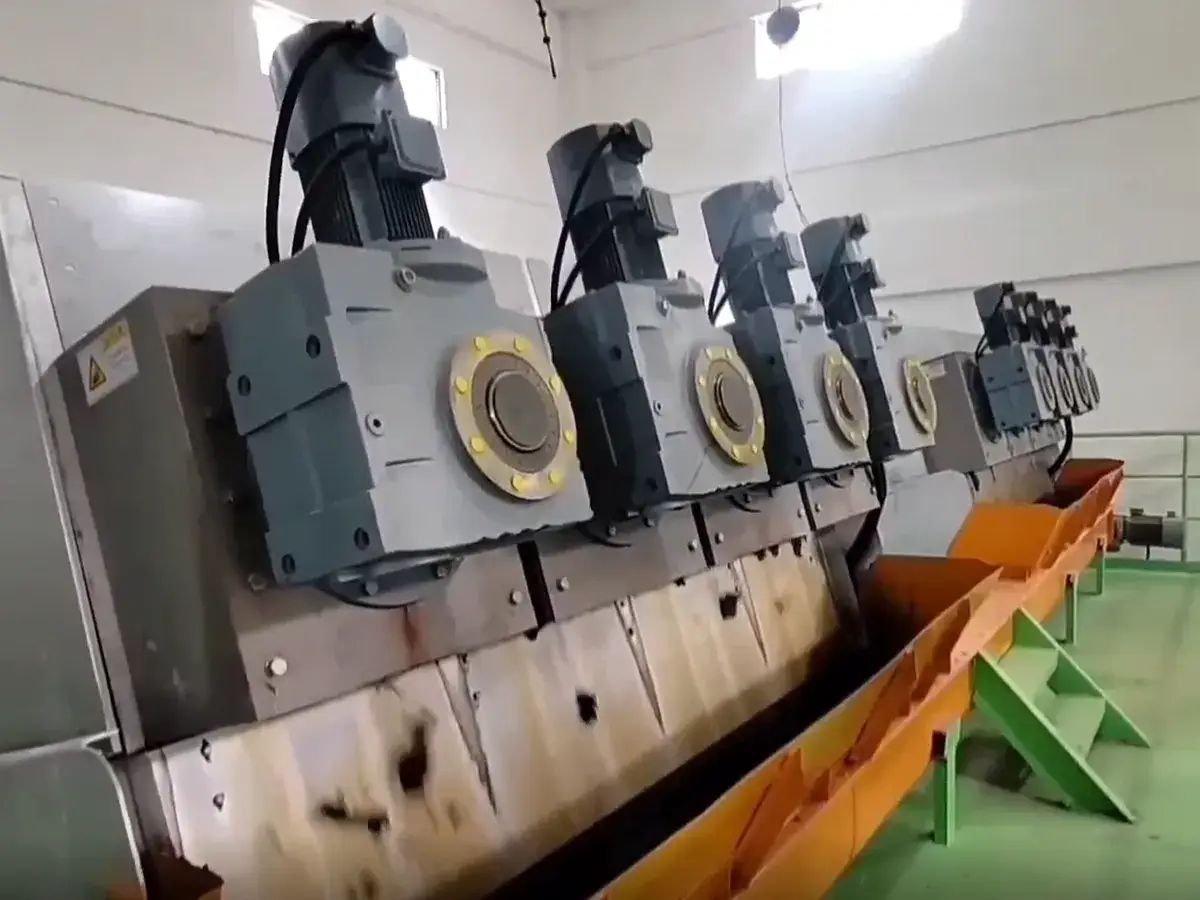
Municipal Sludge Dewatering Project in Guangzhou
At Guangzhou Yonghe Wastewater Treatment Plant, excess municipal sludge from the Phase I and Phase II domestic wastewater treatment facilities had a moisture content of about 98% when discharged from the thickening tanks. We provided a 100 tons/day treatment solution to reduce the moisture content and support downstream sludge disposal.
Technical Specifications
- Treatment Capacity: 100 tons/day, based on municipal sludge with 80% moisture content
- Feed Moisture Content: 98%, reduced to 80% after screw press dewatering
- Final Discharge Moisture Content: Stable at ≤40%, reaching a high level of mechanical sludge dewatering
- Required Installation Space: About 300 m², suitable for compact site layouts
- Construction Period: 60 days, including design, installation, and commissioning
Process Flow
- 98% Moisture Sludge
- Screw Press Dewatering System
- Wet Sludge Hopper
- Conditioning Mixing Tank with Iron-Based Conditioner
- Electrochemical Cell Disruption
- Sludge Distribution Unit
- Pressure Filtration Unit
- Discharge Unit
- ≤40% Moisture Dry Sludge
- Dry Sludge Storage Silo
- Outward Transport for Final Disposal
Advantages
- Lower-Carbon Sludge Treatment: Since the sludge is treated at normal temperature, no thermal drying is required. The energy use and odor emissions are reduced from the source, while iron-based conditioning replaces traditional lime dosing to help avoid secondary heavy metal pollution and meet ESG and dual-carbon requirements.
- Higher Dewatering Efficiency: Mechanical pressure filtration brings the final sludge moisture content down to ≤40%, while traditional plate-and-frame filter presses usually discharge sludge at around 60% moisture. With deeper dewatering, sludge volume is reduced by 3–5 times, and the compact layout requires only 3–5 m² per ton of sludge.
- Lower Operation and Maintenance Costs: The sludge dewatering process can be monitored daily through the PC and APP system, which reduces the need for constant on-site supervision. With no complex pretreatment steps, the dewatering line is easier to manage and requires less routine maintenance.